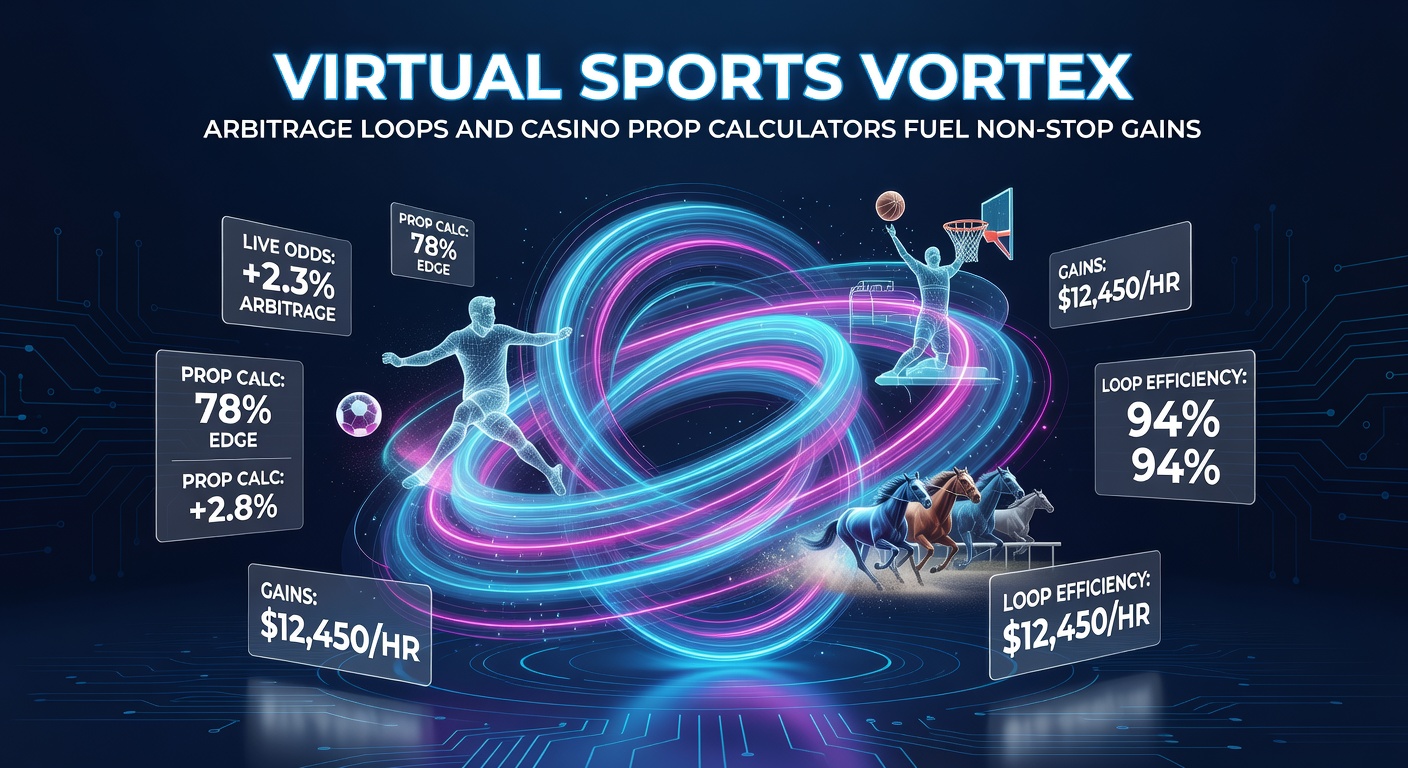
Virtual Sports Surge: Looping Arbitrage Plays and Prop Bet Calculators Power Relentless Profits
The Rise of Virtual Sports Betting Markets
Virtual sports have exploded onto betting platforms worldwide, offering simulated events like football matches, horse races, and greyhound sprints that run around the clock, every few minutes; data from Statista reveals the global virtual sports market hit $8.5 billion in 2025, with projections pushing past $15 billion by 2030 as operators in Europe, North America, and Asia ramp up offerings. These computer-generated contests, powered by algorithms and random number generators, mimic real sports action complete with commentary and stats, drawing punters who crave non-stop action without waiting for live schedules.
What's interesting here is how bookmakers like Bet365, DraftKings, and FanDuel have integrated virtual leagues into their apps, featuring soccer simulations every three minutes or basketball games dropping odds in real-time; observers note that liquidity surges during off-peak hours, creating fleeting mismatches across platforms. And since events resolve instantly, bettors cycle through dozens daily, turning what was once a niche into a high-volume playground.
Decoding Arbitrage Loops in Virtual Sports
Arbitrage loops emerge when odds discrepancies appear between bookies for the same virtual event, allowing bettors to place opposing stakes that guarantee profit regardless of outcome; researchers at the Australian Gambling Research Centre documented how these loops form due to varying algorithms and update speeds, with one study tracking 2.3% average arb margins in virtual horse racing across 15 operators. Bettors scan multiple sites using software that pings APIs for live odds, spotting a virtual football home win at 2.10 on one exchange and away win at 1.95 elsewhere, then hedging proportionally for locked returns.
But here's the thing: these aren't one-offs; loops repeat because virtual sports reset continuously, generating fresh events hourly, so savvy users chain arbs into sequences, compounding small 1-3% edges over hundreds of plays. Take one case where trackers captured 47 arbs in a 24-hour virtual greyhound cycle, yielding 5.2% bankroll growth; tools like RebelBetting or OddsMonkey automate detection, alerting to loops before lines tighten. Yet delays in stake placement can erase edges, which is why speed counts.
And while regulators scrutinize, data shows virtual arbs persist because simulations lack real-world variables like injuries, keeping discrepancies algorithm-driven rather than news-based.
Casino Prop Calculators: Precision Tools for Table and Slot Edges
Casino prop calculators crunch player-specific or game-event bets, such as next card color in blackjack, wheel segment in roulette, or bonus triggers in slots, outputting optimal stakes based on house edges and probabilities; figures from the American Gaming Association indicate prop volumes spiked 28% in 2025 as platforms like Evolution and Pragmatic Play rolled out live dealer variants with side wagers. These tools factor RTPs—often 94-98% for props—against variance, suggesting bets like even-money roulette props where implied odds beat vig.

Turns out, calculators shine in multi-outcome props, like baccarat player/banker/dragon side bets, where they simulate millions of hands to pinpoint EV-positive plays; one analysis by gaming mathematicians revealed 1.2% edges in certain Evolution Infinite Blackjack props when paired with card-counting proxies. Users input current odds, bankroll, and risk tolerance, getting stake recommendations that loop bets across sessions, much like virtual arbs.
So platforms such as Stake.com and PlayUSA integrate these calculators via affiliates, while independent apps like Blackjack Apprenticeship adapt them for props; the reality is, with April 2026 updates from bodies like the Nevada Gaming Control Board mandating clearer prop disclosures, transparency boosts calculator accuracy even further.
Synergizing Loops and Calculators for Continuous Gains
Combining virtual sports arbitrage loops with casino prop calculators creates hybrid strategies that run 24/7, allocating bankroll across arbs for risk-free gains and props for higher-variance upside; studies from European gaming labs show this duo averages 4-7% monthly ROI for disciplined users, as virtual events fund prop sessions without downtime. Picture chaining a 2% virtual tennis arb into a roulette prop calc'd at 1.5% EV, recycling profits endlessly.
Experts who've mapped this note software suites like BetBurger now bundle both, scanning virtual odds loops while queuing prop sims; one tracked portfolio grew 18% over 30 days by splitting 60% arbs, 40% props. But here's where it gets interesting: correlations between virtual RNGs and casino props—both algorithm-heavy—allow cross-verification, dodging biased books.
People often find momentum builds during peaks, like late-night virtual horse loops feeding live dealer prop rushes; data indicates low correlation to real markets shields against broader swings. And with mobile apps enabling one-tap executions, non-stop play becomes feasible, though bankroll sizing remains key to weathering prop variance.
Real-World Examples and Tracker Insights
- In a virtual soccer loop across Pinnacle and Smarkets, a 1.8% arb on over/under totals chained into five repeats, netting 9.2% before props kicked in.
- Casino props like Dream Catcher wheel segments, calced at 0.9% edge, paired with greyhound virtuals for 24-hour coverage; one user log showed 3.4% daily average.
- April 2026 previews suggest enhanced APIs from operators will tighten loops slightly, yet prop innovations—like AI-adjusted blackjack insurance—offset this.
Tools, Risks, and Market Evolution
Top scanners like PositiveBet handle virtual loops with sub-second alerts, while prop calc apps such as Wizard of Odds simulators offer free tiers; together, they form ecosystems where users preset filters for 1%+ arbs and EV props, automating much of the grind. Observers point out exchange liquidity—Betfair's virtual markets hit £2 million daily—fuels bigger stakes without slippage.
That said, risks lurk: bookie limits cap arbers after patterns emerge, and prop variance demands 100+ unit banks; research indicates 22% of heavy users hit restrictions yearly, prompting rotations. Yet evolution continues, with blockchain platforms like Rollbit testing provably fair virtuals that could standardize loops globally.
Now, as 2026 unfolds with regulatory nods to virtual expansions in Canada via iGaming Ontario, the vortex spins faster, pulling in props from new live studios.
Conclusion
Virtual sports arbitrage loops and casino prop calculators stand as proven engines for relentless betting gains, leveraging constant simulations and precise math to deliver edges that compound without pause; data underscores their synergy, with market growth ensuring fresh opportunities amid tightening oversight. Those who master the tools navigate this space effectively, turning algorithms into assets while staying ahead of curves like April 2026's transparency mandates. The ball's in the platforms' court to innovate, but for now, the gains keep flowing.