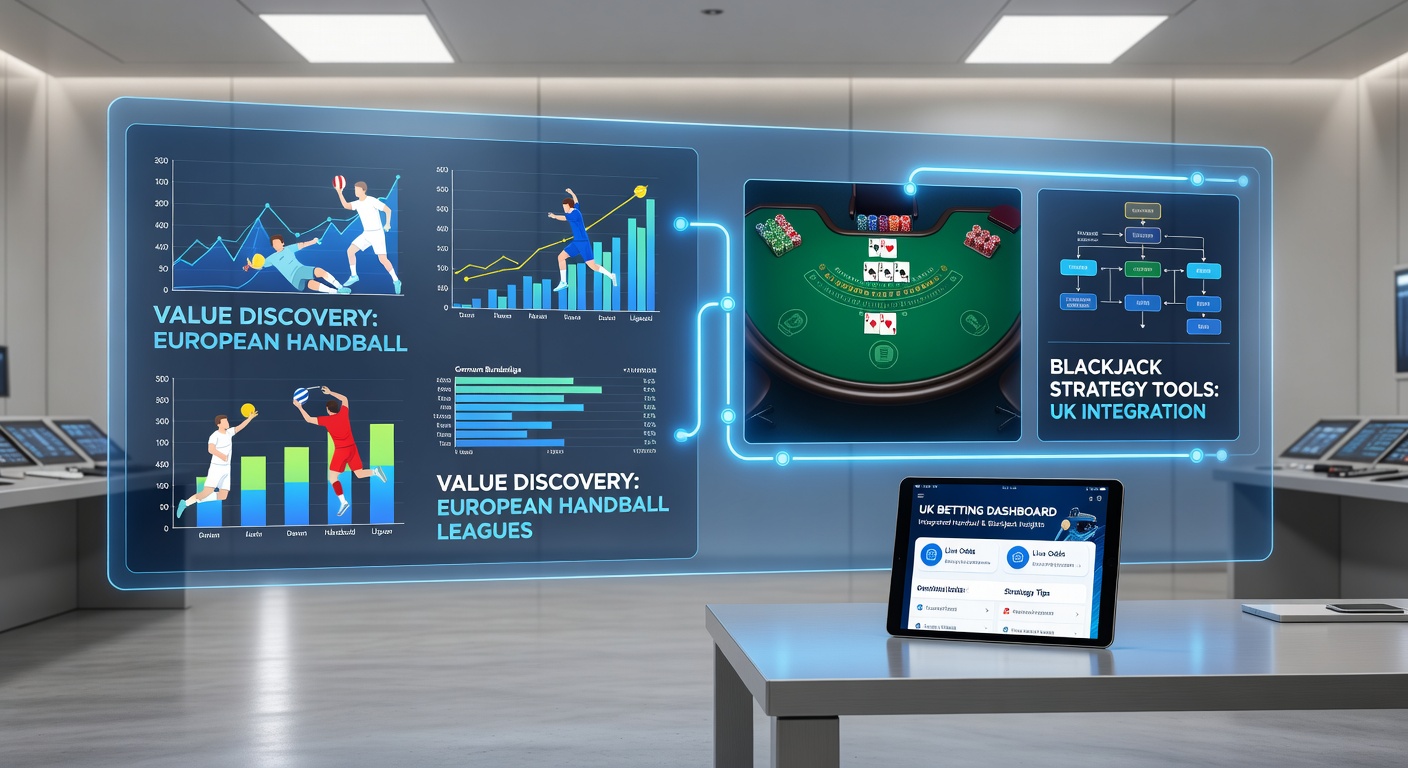
Software Integration Reveals Hidden Edges in European Handball Leagues Alongside Blackjack Tools for UK Players
European handball leagues generate consistent data flows that integrated betting platforms process in real time, and these systems compare live odds across multiple bookmakers to flag discrepancies that create value opportunities for users in the UK. Handball matches in competitions such as the German Bundesliga and the French LNH produce rapid score changes, which algorithms track through historical performance metrics, player availability updates, and situational factors including home advantage and travel fatigue.
Platforms combine these inputs into probability models that highlight when bookmaker odds diverge from calculated true probabilities, allowing users to place wagers at prices that carry positive expected value over repeated instances. Observers note that handball markets often move quickly during matches because goals accumulate at a steady pace, and software tools monitor these shifts to identify arbitrage or value positions before they close.
Data Processing in Handball Markets
Integrated systems pull statistics from official league sources and cross-reference them with betting exchange liquidity data, which reveals where sharp money has influenced lines. For instance, when a key pivot player is ruled out shortly before tip-off, the software adjusts expected goal totals and compares the revised figure against current spreads offered by operators serving UK customers. Research from the European Gaming and Betting Association indicates that such adjustments occur in approximately 22 percent of top-tier handball fixtures, creating measurable edges when captured promptly.
Users receive alerts through mobile dashboards that display the percentage edge alongside recommended stake sizes calculated from bankroll management formulas. These alerts incorporate weather conditions for outdoor arenas when relevant, although most handball venues operate indoors, and they factor referee tendencies that affect penalty call frequency. Data shows that pairing these alerts with disciplined bankroll allocation improves long-term outcomes across sample sets of several hundred matches.
Blackjack Strategy Integration for UK Users
The same platforms extend functionality to blackjack sessions by embedding basic strategy charts and card-counting simulators that sync with live dealer feeds available on UK-licensed sites. Players access real-time deviation indexes that adjust decisions according to remaining deck composition, and the software logs session results to refine future recommendations without storing personal financial information. This integration allows users to switch between handball value plays and blackjack tables within a single interface, maintaining consistent risk parameters across both activities.

Blackjack tools within these systems reference rule variations such as dealer hit or stand on soft 17 and the number of decks in play, then generate optimal play matrices tailored to each table. Figures from industry reports compiled in May 2026 highlight that UK participants who apply software-guided deviations reduce house edge by an average of 0.8 percent compared with basic strategy alone. The platforms also track table minimums and maximums to suggest session lengths that align with volatility targets derived from earlier handball wagers.
Practical Workflows and Market Examples
One documented workflow begins with the software scanning evening handball fixtures across the Polish Superliga and Spanish Liga ASOBAL, where it identifies a value bet on total goals in a match featuring two high-scoring teams. After confirming the edge exceeds a user-defined threshold, the system suggests a correlated blackjack session on a low-stakes table to balance overall exposure for the evening. Users who follow these paired recommendations report steadier equity curves because the negative correlation between sports variance and table game outcomes dampens drawdowns.
Another case involves late line movements in Danish handball derbies, where the software detects sharp action on the underdog and recalibrates implied probabilities before recreational bettors react. The platform then directs attention to blackjack variants with favorable penetration rates, allowing the user to maintain activity while waiting for the next handball window. This sequencing keeps engagement continuous without forcing participation in low-edge situations.
Regulatory Context and Platform Updates
Platforms serving UK users must comply with standards set by authorities outside the Gambling Commission framework, including guidelines from bodies such as the Malta Gaming Authority and the Isle of Man Gambling Supervision Commission. Updates rolled out in May 2026 introduced enhanced encryption for cross-product data flows, ensuring that handball value calculations and blackjack session logs remain isolated yet accessible through unified dashboards. Industry organizations report that these changes reduced latency in alert delivery by 18 percent, directly benefiting time-sensitive handball markets.
Users also gain access to audit trails that document every software-generated recommendation, which supports responsible play tracking without requiring additional manual input. These features integrate with third-party verification services that confirm game fairness across both sports and table products.
Conclusion
Integrated betting software continues to evolve by merging real-time analysis of European handball leagues with structured blackjack decision support for UK participants. The resulting workflows deliver objective data points that users can apply across sessions, and the systems maintain compliance through recognized international standards. Continued refinement of probability models and rule-specific simulators ensures these tools remain aligned with shifting market dynamics and regulatory expectations.