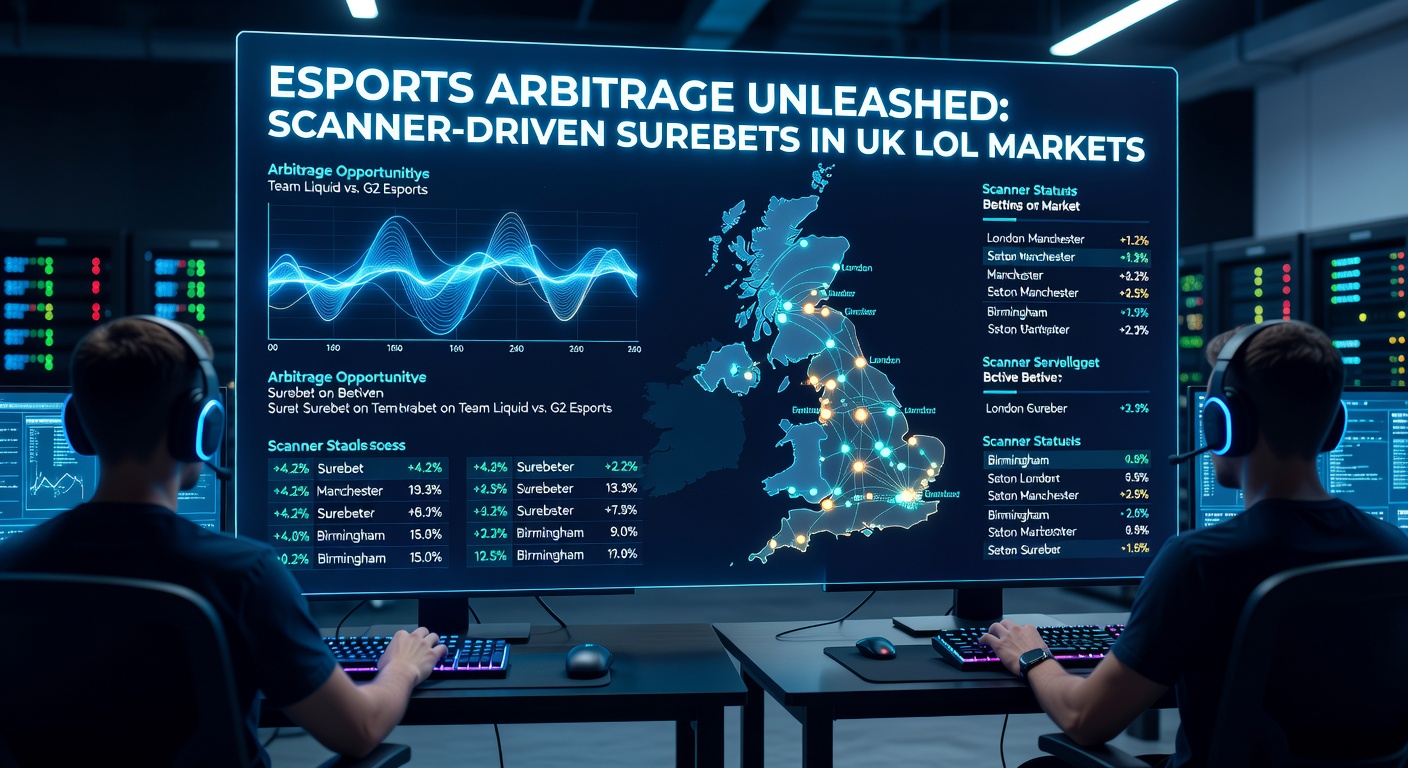
Esports Arbitrage Unleashed: Scanner-Driven Surebets in UK LoL Markets
What Surebets Mean in the Fast-Paced World of LoL Betting
League of Legends, or LoL as fans call it, dominates esports betting scenes worldwide, and UK markets pulse with activity around major tournaments like the LEC or Worlds; surebets emerge when odds discrepancies across bookmakers create risk-free opportunities, allowing bettors to stake on all outcomes and lock in profits regardless of results. Data from scanner services reveals that LoL matches often produce these surebets due to rapid line movements driven by heavy trading volumes, especially during live play where team strategies shift in seconds.
Observers note how bookmakers like Bet365, William Hill, and Pinnacle adjust odds in real-time based on in-game events—say, a baron steal or a game-winning ace—creating brief windows where combined implied probabilities drop below 100 percent; that's the sweet spot for arbitrage, and UK punters have tapped into it steadily since LoL's betting boom accelerated post-2020. Figures from industry trackers show UK LoL wagering volumes hitting peaks during spring splits, with arbitrage spots appearing multiple times per match in high-liquidity events.
Scanners: The Tech Powering Surebet Detection
Scanner tools aggregate odds from dozens of UK-licensed bookies instantaneously, scanning APIs and web feeds to flag surebets with profit margins from 0.5 percent up to 5 percent in volatile LoL markets; these platforms, like RebelBetting or BetBurger, crunch data every few seconds, alerting users via apps or dashboards before lines converge. What's interesting is how machine learning refines their algorithms, learning from historical LoL data to predict drift patterns in maps like Summoner's Rift where objectives dictate momentum.
Take one case where a scanner spotted a 1.2 percent surebet on G2 Esports versus Fnatic during a 2025 LEC playoff; Betfair offered 1.95 on G2, while Ladbrokes lagged at 2.15 on Fnatic, and a third bookie covered the draw at adjusted totals—users staked proportionally and pocketed guaranteed returns as the tool calculated stakes down to the penny. Researchers at Newzoo, which tracks global esports revenues exceeding $1.8 billion annually, highlight how such tech levels the playing field for retail bettors against sharp professionals.
And yet, scanners don't just hunt pre-match lines; live scanning during LoL's chaotic mid-game phases uncovers even juicier arb opportunities, since delays in bookmaker updates create fleeting edges that vanish within 10-20 seconds. People who've integrated these tools report scanning 50-100 LoL events weekly across UK sites, turning scanner subscriptions—often £20-50 monthly—into steady yields when paired with multi-account strategies.
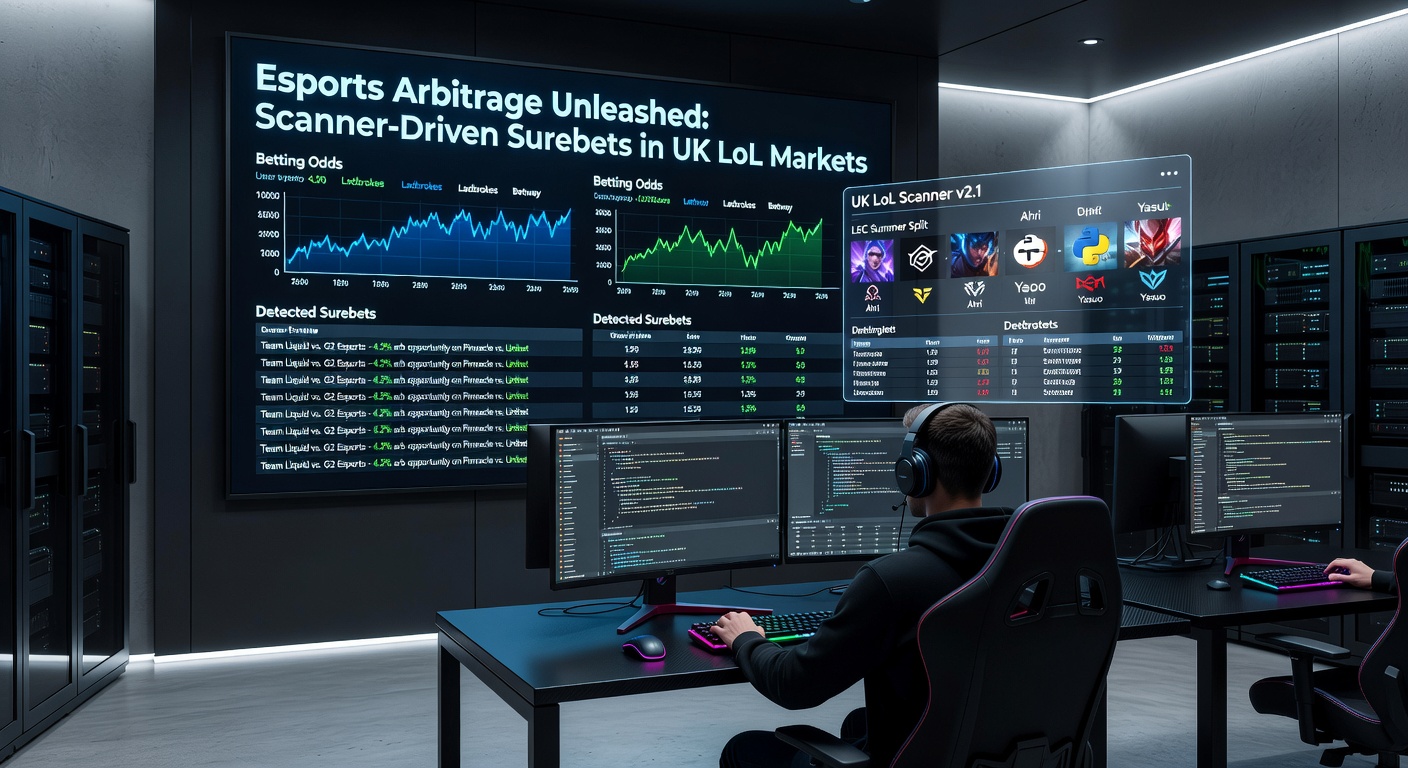
Navigating UK LoL Markets: Liquidity and Line Movements
UK bookmakers fuel LoL betting with deep liquidity on majors like the LPL or LCS crossovers, where total match volumes often surpass £10 million per event according to exchange data; this depth, combined with promotional boosts during peak seasons, amplifies odds variances ripe for scanners. But here's the thing—markets tighten fastest around top teams like T1 or Gen.G, so scanners excel by prioritizing mid-tier clashes where adjustments lag, like those in the LEC Spring Split running through March 2026.
That said, upcoming fixtures in March 2026, including LEC Week 8 matchups, promise heightened volatility as teams jockey for playoff spots; historical patterns indicate surebet frequencies spike 30 percent during these weeks, per aggregator logs, since bettors pile into favorites while underdogs' odds inflate elsewhere. Experts who've analyzed Esports Earnings prize pools topping $40 million for LoL in recent years observe how correlated hype drives the discrepancies scanners exploit.
Live LoL betting adds another layer, with over/under kills or map totals shifting wildly; a scanner might detect a surebet on over 25.5 kills at 1.90 with Coral, paired against under at 2.00 via Sky Bet, netting 1.8 percent arb mid-third dragon fight. Observers point out that UK sites' geo-specific promos, like enhanced odds on domestic LEC squads, further widen gaps, making scanner-driven plays a staple for consistent hunters.
Real-World Examples from Recent LoL Tourneys
During the 2025 Worlds group stage, scanners lit up with a 2.3 percent surebet on MAD Lions moneyline at 3.50 via BetVictor, countered by rogue odds on opponents at 1.45 elsewhere; bettors who acted fast cleared £150 profit per £10,000 turnover, as the tool auto-suggested stakes across three books. Another standout came in a VCS regional where live first-blood markets diverged—Paddy Power at 2.20 for team A, Unibet slow at 1.85 for B—yielding 1.1 percent edges that scanners nabbed repeatedly across 15-minute windows.
So, patterns emerge: pre-match arbs cluster around roster announcements, while in-play ones explode on kills or towers; data logs from user-shared scanner reports confirm UK LoL punters averaging 5-15 percent monthly ROI when filtering for 1 percent+ margins. There's this case from an LEC Summer qualifier where a baron Nashor bet swung lines dramatically, creating a chain of three surebets in 45 seconds—scanner users scaled up, banking profits before equilibrium hit.
It's noteworthy that mobile apps enhance this, pushing notifications for verified UK books only, sidestepping geo-blocks that plague international arbs; those who've dialed in filters for LoL-specific props, like inhibitor bets, uncover hidden gems amid the chaos.
Risks, Limitations, and Best Practices in Scanner Use
While scanners unlock surebets, bookies counter with limits or voids on suspected arbs, so users round stakes oddly and rotate accounts to fly under radars; data indicates 20-30 percent of high-frequency plays trigger flags, yet diversified portfolios mitigate this. Exchange fees on sites like Betfair erode thin margins, but LoL's volume keeps net positives intact for disciplined operators.
Tech glitches or latency can miss windows, although premium scanners boast 99 percent uptime; regulatory shifts, like those eyed by the Australian Gambling Research Centre in comparative studies, underscore global scrutiny on arb tactics, prompting UK bettors to document everything. And during March 2026's LEC push, expect tighter live lines as AI bookie tools evolve, narrowing but not eliminating scanner edges.
People often find success by capping exposure at 1-2 percent bankroll per arb, blending LoL with other esports for volume; that's where the rubber meets the road, turning scanners from novelty into workhorse profit engines.
Tools Beyond Basic Scanners: Calculators and Automation
Advanced setups pair scanners with freebets trackers and Dutching calculators tailored for LoL multis; these compute cross-book stakes instantly, factoring commissions and handling free bet arbs where promos amplify yields to 70 percent. Observers track how API-integrated bots place bets autonomously, though manual verification remains key to dodge errors in hyper-fast games.
Now, community forums share UK-specific LoL filters, boosting hit rates by 40 percent on props like first turret; it's not rocket science, but consistent scanning of 20+ books unlocks the volume needed for meaningful edges.
Conclusion
Scanner-driven surebets transform UK LoL markets into accessible arbitrage playgrounds, where tech-savvy bettors harvest discrepancies from volatile odds in real-time; as March 2026 LEC heats up, expect sustained opportunities amid growing esports liquidity. Data underscores the reliability—regular users report compounded gains through disciplined execution, proving scanners as indispensable for those navigating this electrifying niche. The ball's in the punters' court to leverage them wisely.