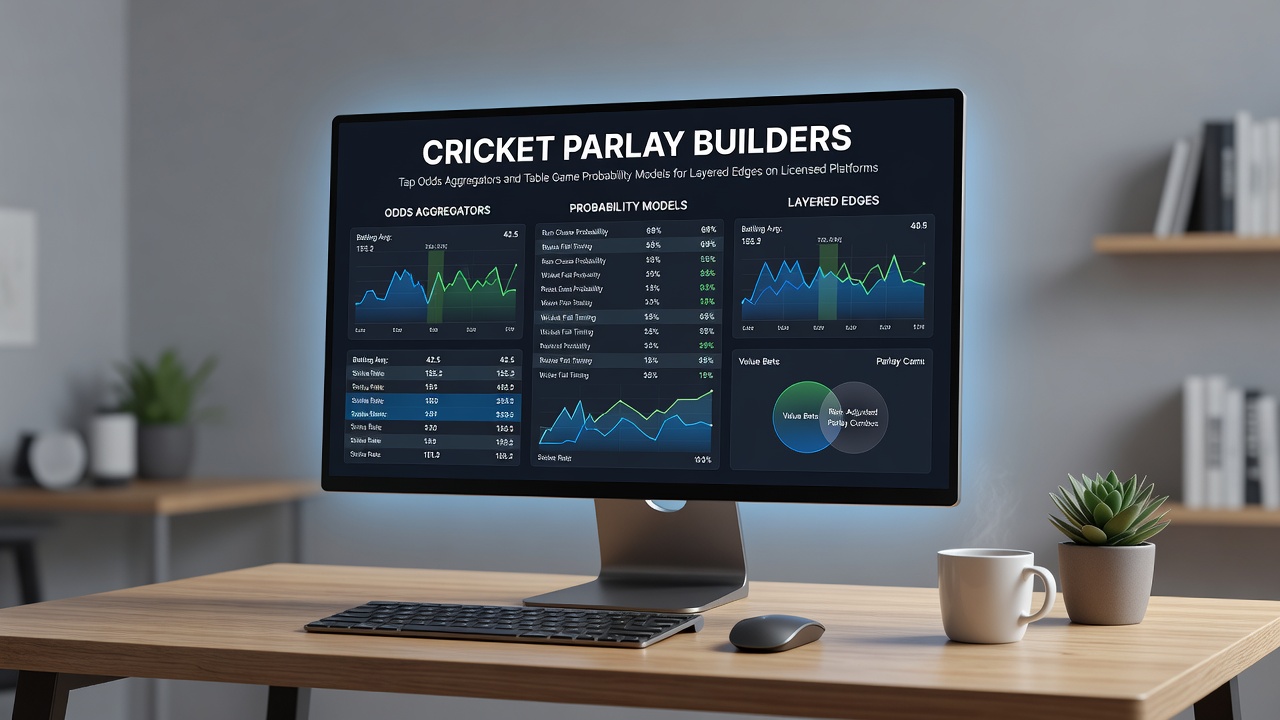
Cricket Parlay Builders Harness Aggregators and Probability Models for Edges on Licensed Platforms
Cricket parlay builders allow users to combine multiple match outcomes into single wagers, and these tools draw directly from odds aggregators that compile data across licensed operators while table game probability models supply additional calculation layers for risk assessment on regulated sites. Licensed platforms in various jurisdictions maintain these features under oversight from bodies such as the Victorian Commission for Gambling and Liquor Regulation, which tracks operator compliance with data transparency rules.
Core Mechanics of Parlay Builders in Cricket Markets
Parlay builders process selections from formats including test matches, one-day internationals, and T20 leagues, and they calculate combined odds by multiplying individual probabilities while applying built-in margin adjustments that platforms disclose in their terms. Data shows these builders update in real time as match conditions shift, with aggregators pulling lines from multiple sources to highlight discrepancies before settlement occurs. Observers note that users often select three to five legs per parlay, spanning player performances, team totals, and session outcomes, because the structure multiplies potential returns yet increases variance across the full ticket.
Odds Aggregators and Their Integration Points
Odds aggregators scan feeds from licensed bookmakers and present consolidated views that parlay builders then import automatically, and this connection reduces manual entry errors while exposing brief windows where combined lines exceed standard market averages. Researchers at institutions studying sports analytics have documented how aggregator APIs deliver updates every few seconds during live play, which allows builders to recalibrate parlay totals without requiring separate verification steps. Platforms licensed in Australia and parts of Europe incorporate these systems under requirements that mandate clear display of source odds, and figures from industry reports indicate higher usage rates during major tournaments such as the Indian Premier League season.
Table Game Probability Models as Layering Components
Table game probability models, originally developed for games like blackjack and roulette on the same licensed platforms, supply mathematical frameworks that users apply to cricket parlays for variance estimation and bankroll allocation, and these models run alongside aggregator data without altering core sports odds. Studies from academic sources on gaming mathematics show that probability distributions from card and wheel games help quantify streak risks in multi-leg bets, enabling structured approaches that treat cricket outcomes as sequential events rather than isolated picks. Licensed operators permit this cross-application because the models operate within the site's analytical tools, and data from Canadian provincial regulators highlights similar patterns where users combine sports and table game calculators on unified dashboards.

One documented case involves platforms that embed simulation engines, originally tuned for blackjack side bets, into cricket parlay previews, and these engines generate thousands of outcome iterations to display projected distribution curves. The approach connects directly to aggregator outputs because both systems reference the same underlying probability tables, which reduces the need for external software while keeping all activity within the licensed environment. What's interesting here is that operators began expanding these shared tools in early 2026, with several sites rolling out unified calculators by June of that year to meet updated reporting standards from regional authorities.
Platform Requirements and June 2026 Updates
Licensed platforms must maintain audit trails for all aggregator and model outputs, and regulatory notices issued ahead of June 2026 emphasized stricter verification of third-party data feeds to prevent discrepancies in displayed probabilities. Operators responded by enhancing API security and requiring explicit user consent for model-assisted calculations, which aligns with broader international standards set by groups such as the National Council on Problem Gambling. Those who monitor these changes report that the updates primarily affect how parlays display risk metrics rather than restricting access, and the changes apply uniformly across cricket and table game sections.
Layered Application Examples Across Markets
Users on licensed sites construct layered positions by first selecting cricket legs through the parlay builder, then cross-referencing aggregator spreads, and finally applying table game models to size the stake according to simulated drawdown scenarios. One instance tracked during the 2025-2026 Ashes series showed operators displaying side-by-side views where blackjack-derived standard deviation figures adjusted recommended wager amounts for multi-leg cricket tickets. Aggregators flag line movements that occur after initial selection, and the probability models recalculate exposure instantly, which keeps the entire process contained within the platform's compliance framework.
Another pattern emerges during T20 world cup events, where short-format volatility benefits from probability overlays that estimate cluster risks across consecutive matches, and licensed operators in multiple regions have confirmed these features through public system descriptions. Data indicates consistent usage growth since the introduction of integrated dashboards, with no reported conflicts between sports and table game regulatory categories.
Conclusion
Cricket parlay builders continue to draw from odds aggregators and table game probability models because licensed platforms support these combined functions under established oversight structures, and the June 2026 platform adjustments reinforced transparency requirements without altering core mechanics. The systems operate through documented data flows that keep all calculations within regulated boundaries, providing users with structured tools for multi-market positioning across cricket and table game sections.