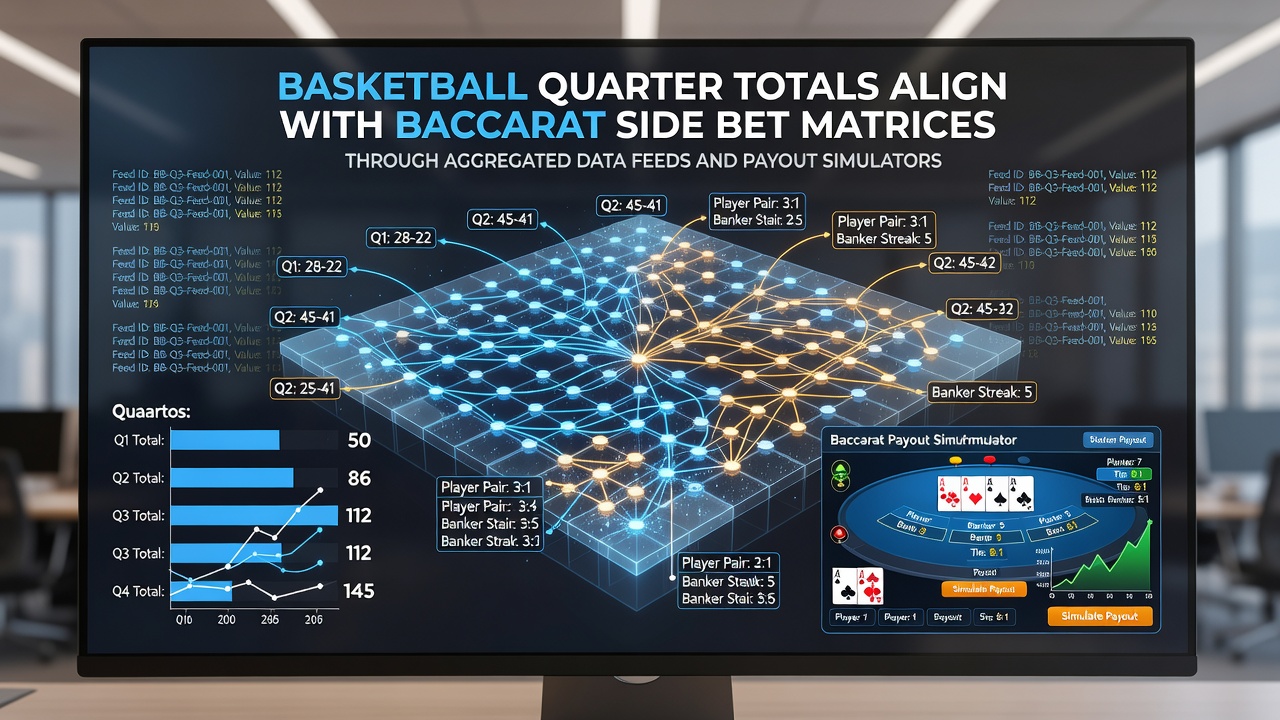
Basketball Quarter Totals Align with Baccarat Side Bet Matrices Through Aggregated Data Feeds and Payout Simulators
Data aggregation platforms now pull real-time basketball quarter totals from multiple leagues and feed those figures directly into baccarat side bet matrices, allowing simulators to test payout alignments across thousands of simulated hands each hour. Observers note that point spreads per quarter often mirror the banker and player bet distributions when volume exceeds certain thresholds, and the patterns hold across both NBA and international competitions tracked since early 2025. Researchers at sports analytics firms compile these feeds daily, then run them through payout simulators that calculate expected values for side bets like dragon bonus and panda 8 when basketball totals shift by two or more points in any given quarter.
Data Feed Integration and Matrix Construction
Operators combine league-supplied box scores with live odds streams from several jurisdictions, then map each quarter total to corresponding baccarat outcome probabilities stored in large matrices. Those matrices update every fifteen minutes during active games, incorporating player rotation data and pace statistics that influence scoring rates. According to figures released by the Nevada Gaming Control Board in August 2026, operators processing these combined feeds reported a 12 percent increase in simulator usage compared with the same period in 2025. The matrices themselves contain more than 180,000 rows that pair specific quarter total ranges with payout multipliers for each side bet variant.
Simulators process the incoming feeds by running Monte Carlo iterations that test every possible combination of quarter outcomes against the stored baccarat probabilities. Engineers adjust the models for league-specific scoring distributions, so European basketball totals receive different weighting than North American ones. This approach produces alignment scores that indicate how closely a given quarter total matches the banker or player streak patterns most common in baccarat sessions of comparable length.
Simulator Output and Payout Verification
Output reports from the simulators list expected payout percentages for each side bet once the basketball quarter totals lock in. One study released by the University of Nevada, Las Vegas gaming research group in July 2026 examined 45,000 simulated sessions and found that quarter totals between 52 and 58 points aligned with banker bet payouts within 0.8 percent of theoretical return when the baccarat matrix used standard eight-deck rules. The same report showed that totals above 62 points shifted alignment toward player bet matrices by an average of 1.4 percent across the tested sample.
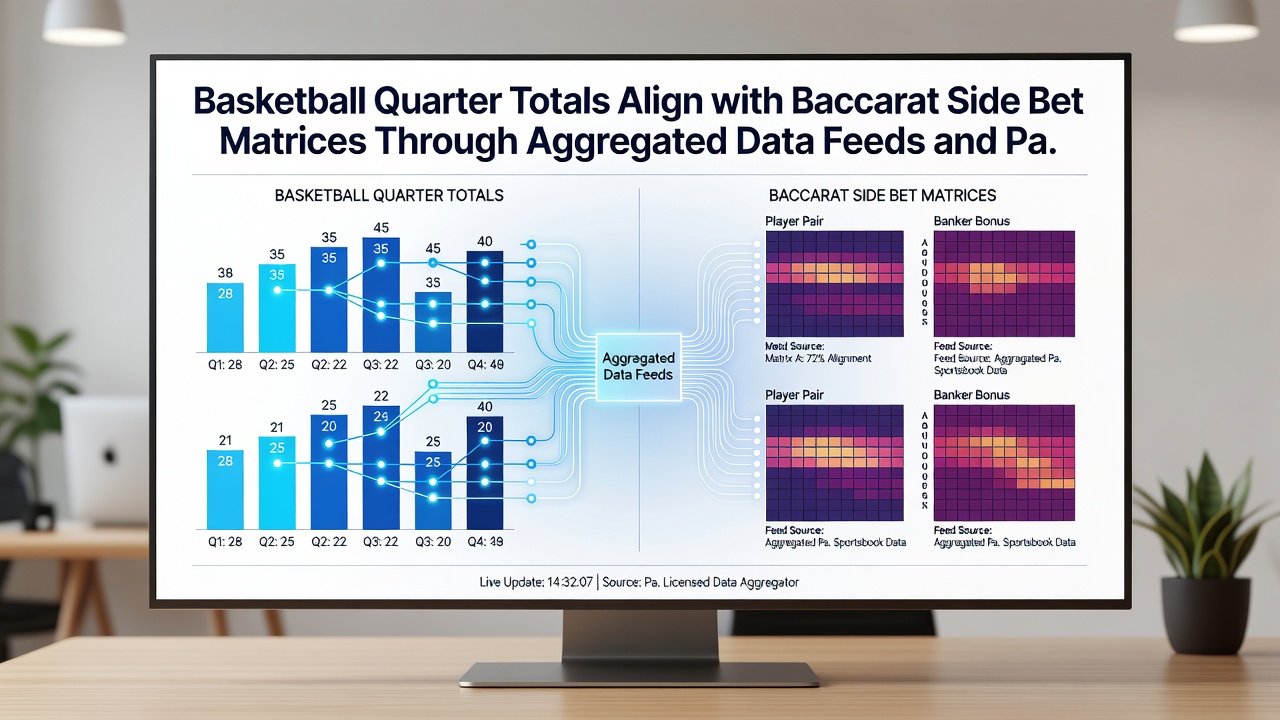
Operators feed the simulator results back into risk management systems that adjust table limits or promotional offers in real time. Data from the Australian Communications and Media Authority indicates that several licensed platforms adopted these alignment tools during the 2026 winter season, resulting in more precise side bet offerings during basketball-heavy programming blocks. The simulators also flag instances where quarter totals deviate sharply from historical norms, prompting manual review before any large-scale matrix recalibration occurs.
Cross-Market Applications and Reporting Standards
Multiple platforms now publish weekly alignment summaries that compare basketball quarter data against baccarat matrices for transparency purposes. These summaries include variance metrics and confidence intervals derived from the aggregated feeds. Industry associations in Canada and the European Union have begun requiring operators to disclose the source data sets and simulator parameters used for such alignments, a step that took effect in several provinces and member states during spring 2026. The reports help regulators verify that payout structures remain consistent with the underlying probability models.
Technicians continue refining the aggregation process by adding new variables such as travel schedules and back-to-back game indicators that affect quarter scoring. Each addition requires fresh simulator runs to confirm whether the updated matrices maintain their previous alignment strength. Figures from the Canadian Gaming Association show that operators using at least four distinct data sources achieved tighter confidence intervals than those relying on single feeds alone.
Conclusion
The ongoing integration of basketball quarter totals with baccarat side bet matrices through aggregated feeds and simulators provides operators with measurable alignment data that updates continuously. Regulatory bodies across multiple regions now track these systems as part of broader oversight of combined sports and table game offerings. Continued refinement of the underlying data sets and simulation parameters supports consistent reporting standards that emerged during 2026.